L'église Saint-Maurice
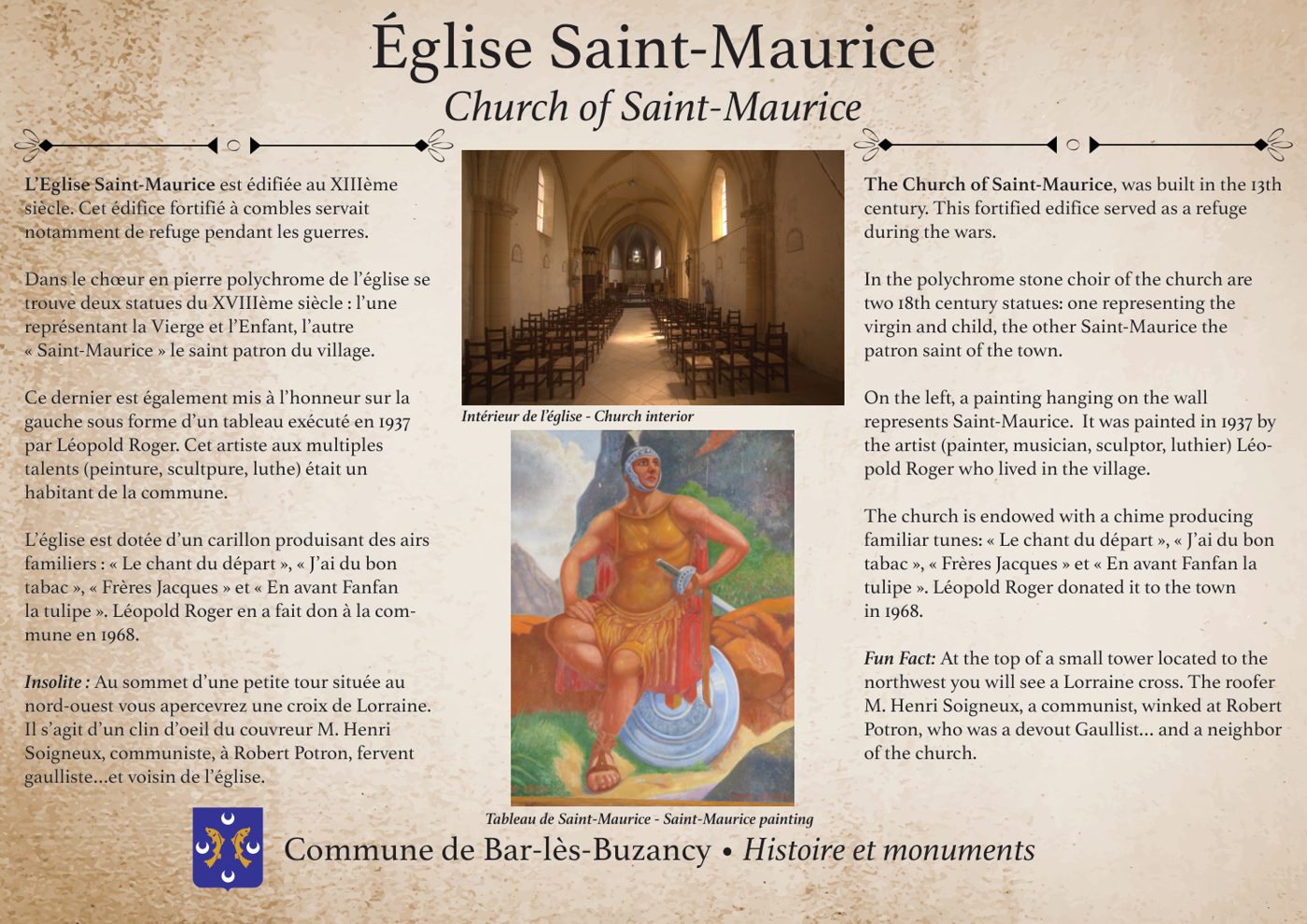
L’église Saint-Maurice est édifiée au XIIIe siècle. Cet édifice fortifié à combles servait notamment de refuge pendant les guerres.
Dans le chœur en pierre polychrome de l’église se trouvent deux statues du XVIIIe siècle : l’une représentant la Vierge et l’Enfant, l’autre « Saint-Maurice », le saint patron du village.
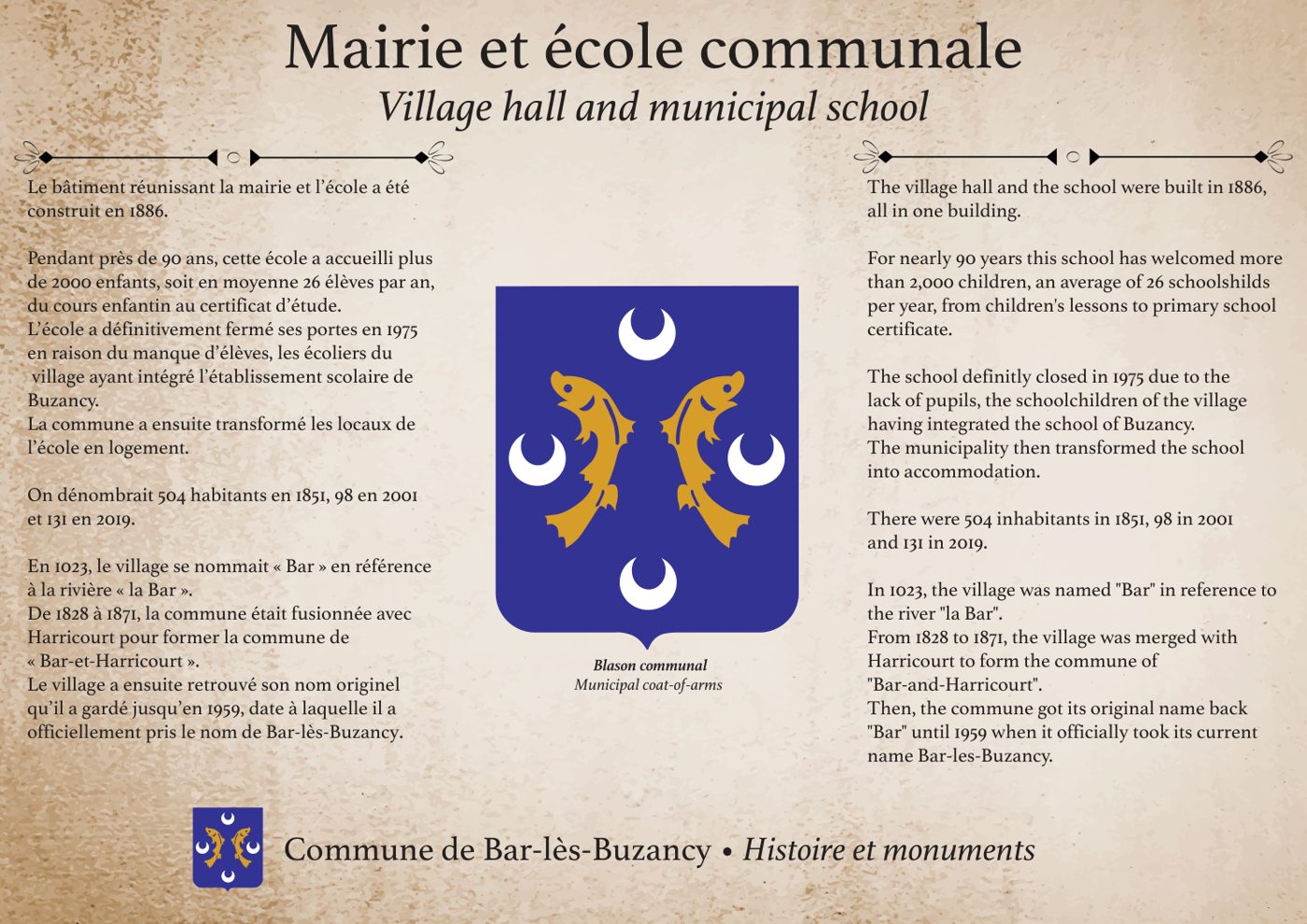
Ce dernier est également mis à l’honneur sur la gauche sous forme d’un tableau exécuté en 1937 par Léopold Roger. Cet artiste aux multiples talents (peinture, sculpture, lutherie) était un habitant de la commune.
L’église est dotée d’un carillon produisant des airs familiers : « Le chant du départ », « J’ai du bon tabac », « Frère Jacques » et « En avant Fanfan la Tulipe ». Léopold Roger en a fait don à la commune en 1968.
Insolite : au sommet d’une petite tour située au nord-ouest, vous apercevrez une croix de Lorraine. Il s’agit d’un clin d’œil du couvreur M. Henri Soigneux, communiste, à Robert Potron, fervent gaulliste… et voisin de l’église.
Sur le panneau : intérieur de l’église ; tableau de Saint-Maurice.
Read in English
The Church of Saint-Maurice was built in the 13th century. This fortified edifice served as a refuge during the wars.
In the polychrome stone choir of the church are two 18th century statues: one representing the Virgin and Child, the other Saint-Maurice, the patron saint of the town.
On the left, a painting hanging on the wall represents Saint-Maurice. It was painted in 1937 by the artist (painter, musician, sculptor, luthier) Léopold Roger, who lived in the village.
The church is endowed with a chime producing familiar tunes: « Le chant du départ », « J’ai du bon tabac », « Frère Jacques » and « En avant Fanfan la Tulipe ». Léopold Roger donated it to the town in 1968.
Fun fact: at the top of a small tower located to the northwest you will see a Lorraine cross. The roofer M. Henri Soigneux, a communist, winked at Robert Potron, who was a devout Gaullist… and a neighbor of the church.